
- Garage-door
Signs Your Garage Door Needs Same-Day Attention
Key Takeaways:
|
Your garage door likely needs same-day attention if it won’t open or close properly, comes off its tracks, has a broken spring or hanging cable, makes loud grinding or banging noises, or suddenly becomes heavy or unstable. These symptoms often indicate mechanical failures that can create safety hazards, damage the opener, or leave your home unsecured if ignored.
This guide explains the key signs that should never be ignored and when it’s time to arrange same-day garage door repair.
Why Some Garage Door Problems Can't Wait Until Tomorrow
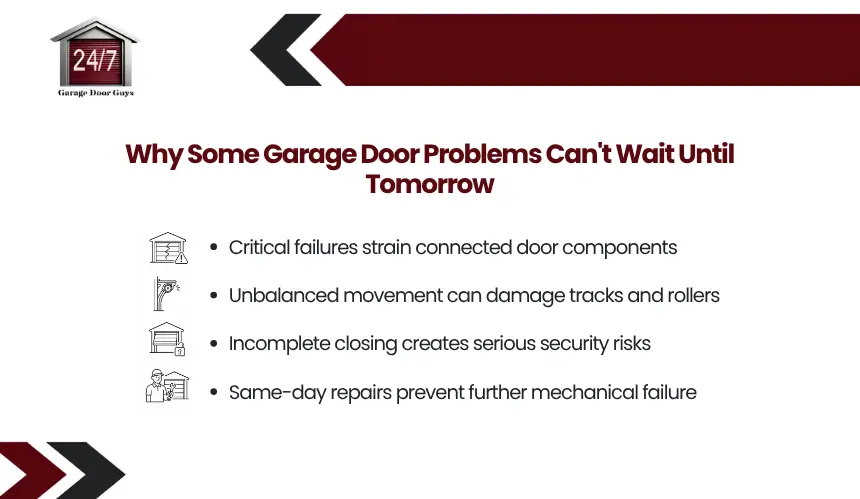
Not every garage door issue is an emergency, but certain failures can quickly turn into safety, security, or property damage risks. Components such as torsion springs, lift cables, rollers, tracks, and the automatic opener work as a connected system. When one critical part fails, it places additional stress on the remaining components, increasing the likelihood of a complete breakdown.
A garage door that is partially supported by a damaged spring or misaligned track may continue operating for a short time, but each cycle places uneven loads on the door and opener. This can bend tracks, strain the motor, wear out rollers, or cause the door to become unstable during movement.
Urgent repairs are also necessary when the garage door can no longer properly secure the opening. A door that will not close completely or unexpectedly reverses can leave your home, vehicles, and belongings exposed until the underlying fault is corrected.
As a general rule, stop using the garage door if it shows signs of structural damage, loses balance, or requires excessive force to operate. Scheduling same-day professional service reduces the risk of further mechanical failure and ensures the door can be inspected and repaired before the problem escalates.
Warning Signs That Mean You Should Schedule Same-Day Garage Door Service
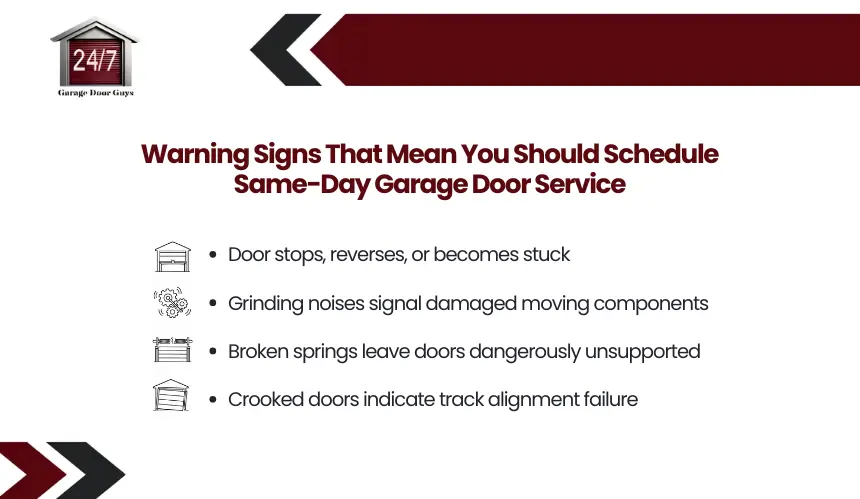
Many garage door failures begin with visible or noticeable changes in how the door operates. The following warning signs typically indicate that a critical component is no longer functioning correctly and should be inspected as soon as possible.
The Door Won't Open or Close Properly
A garage door that refuses to open, stops halfway, or reverses before reaching the ground usually points to a mechanical or electrical fault rather than a minor inconvenience. Common causes include a broken torsion spring, damaged lift cables, misaligned tracks, malfunctioning safety sensors, or an opener that can no longer move the door safely.
If the door becomes stuck in either the open or closed position, avoid forcing it manually or repeatedly activating the opener. Doing so can increase stress on the motor and other moving parts, potentially turning a single failed component into a more extensive repair.
Pro Tip: Test the opener’s safety systems once a month while the door is otherwise operating normally. Block the photo-eye beam to confirm the door will not close, then place a 2-by-4 board flat beneath the door. The door should stop and reverse after contacting the board. Stop using the automatic opener and schedule service if either test fails. |
Loud Grinding, Banging, or Screeching Noises
Garage doors normally produce a steady operating sound. Sudden grinding, scraping, popping, or loud banging noises often indicate that components are wearing unevenly or have already failed.
Different sounds can signal different issues:
- Grinding may indicate worn rollers or damaged bearings.
- Scraping often suggests the door is rubbing against a misaligned track.
- A loud bang is commonly associated with a broken torsion spring.
- Repeated squealing can result from seized rollers or excessive friction between moving parts.
Ignoring unusual noises allows wear to progress, increasing the chance of additional component failure during normal operation.
Broken Springs or Hanging Cables
Garage door springs support most of the door’s weight, while lift cables keep it balanced as it moves. If either component breaks or becomes detached, the door can lose proper support and become difficult or dangerous to operate.
Common warning signs include:
- A visible gap in a torsion spring
- Loose or hanging lift cables
- The door dropping suddenly while closing
- The opener struggling to lift the door
Because these components are under significant tension, they should never be repaired without the proper tools and training. Continuing to use the door after a spring or cable failure can create a serious safety hazard.
The Door Looks Crooked, Bent, or Off Its Tracks
A garage door should move evenly along both tracks. If one side rises higher than the other, the panels appear tilted, or rollers have come out of the track, the door has likely lost its alignment.
An off-track or structurally unstable door places uneven loads on the entire lifting system and may become jammed or collapse if operated further. In this situation, stop using the door immediately and arrange same-day professional service before additional damage occurs.
Other Garage Door Problems That Can Quickly Become Bigger Problems
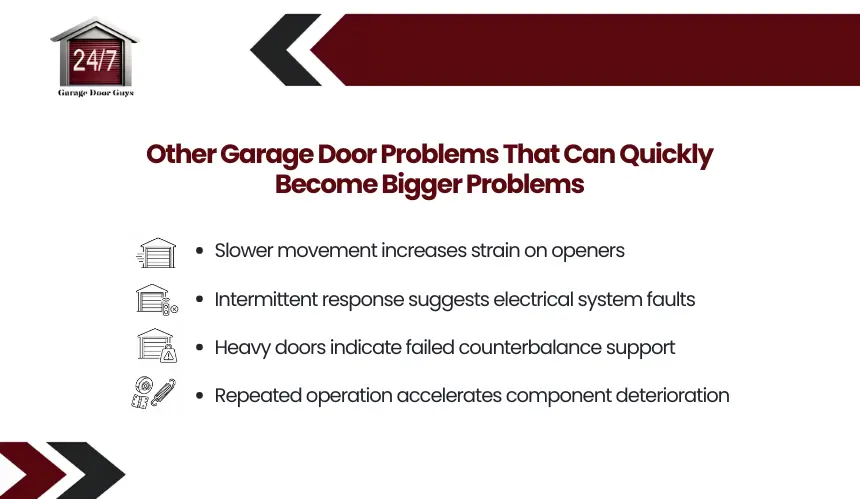
Not every serious garage door problem begins with a complete breakdown. Changes in speed, responsiveness, or the amount of effort needed to operate the door often indicate that critical components are wearing out or no longer working together correctly. Addressing these symptoms early can prevent a more significant failure.
The Garage Door Opens or Closes Much Slower Than Normal
A noticeable decrease in operating speed often means the system is working harder than it should. This can result from worn rollers, increased friction in the tracks, weakening springs, or an opener that is compensating for added resistance.
A slower-moving door places additional strain on the motor and drive system with every cycle. If the door was previously operating at a consistent speed and suddenly becomes sluggish, it should be inspected before the extra load causes additional components to fail.
The Opener Stops Responding Consistently
An opener that works intermittently should not be dismissed as a remote control issue. Inconsistent operation may stem from failing safety sensors, electrical faults, damaged wiring, worn limit switches, or an overheating motor.
Watch for signs such as:
- The opener responds only after multiple attempts.
- The motor runs, but the door does not move.
- The door stops unexpectedly during travel.
- The opener lights flash while the door remains stationary.
These symptoms often indicate that the opener’s control or drive system is no longer functioning reliably and requires prompt diagnosis.
Pro Tip: Check whether the opener has photoelectric safety sensors mounted near the floor. U.S.-market openers manufactured since 1993 should include a secondary reversing system, and the sensors should be no more than six inches above the floor. An older opener without this protection should generally be replaced rather than repeatedly repaired. |
The Door Suddenly Feels Much Heavier Than Usual
A properly balanced garage door should move with relatively little effort when operated manually after the opener has been safely disengaged. If the door suddenly feels significantly heavier, the counterbalance system may no longer be supporting its weight.
This commonly occurs when a torsion spring loses tension or breaks. Continuing to operate a heavy door forces the opener to lift far more weight than it was designed for, increasing the likelihood of motor failure or damage to other lifting components. A sudden change in door weight should always be treated as an urgent warning sign rather than normal wear.
Pro Tip: Do not install a more powerful opener to compensate for a heavy garage door. Openers are designed to move doors that are correctly balanced by their spring system. Additional horsepower may conceal the underlying counterbalance problem while continuing to strain the opener and door hardware. Have the balance and springs professionally inspected instead. |
What Can Happen If You Ignore These Warning Signs
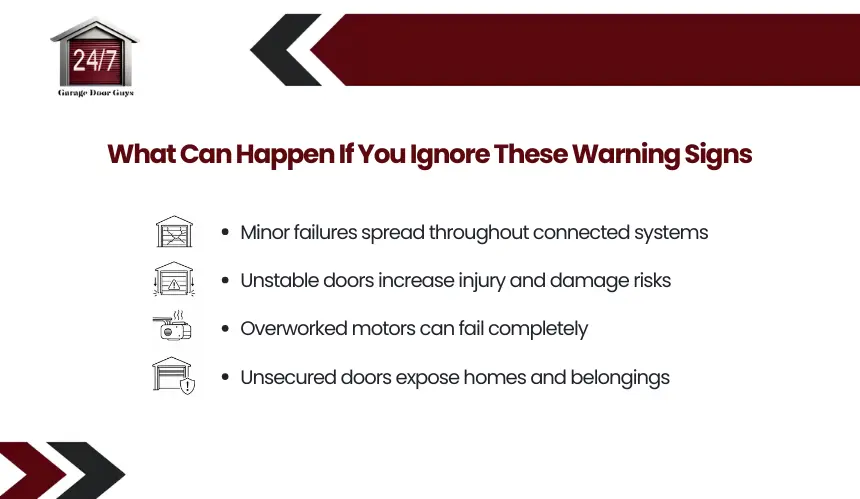
Delaying repairs after your garage door shows signs of failure often allows a localized problem to spread throughout the system. Because the springs, cables, tracks, rollers, hinges, and opener operate together, one damaged component can place abnormal stress on the others, increasing both repair costs and the likelihood of a complete breakdown.
Safety is the most immediate concern. A door with damaged springs, loose cables, or misaligned tracks can move unpredictably, become stuck while opening or closing, or lose the support needed to remain stable. These conditions increase the risk of property damage and personal injury, making emergency garage door repair the safest course of action in many situations.
Ignoring warning signs can also shorten the lifespan of the garage door opener. When the counterbalance system is no longer functioning correctly, the opener must work harder to move the door. Over time, this additional strain can overheat the motor, wear out drive components, or cause the opener to fail entirely.
There are practical consequences as well. A garage door that cannot close securely leaves your home and belongings more vulnerable, while one that will not open can prevent access to vehicles when you need them most. Scheduling repairs when the first urgent symptoms appear is usually faster, safer, and less expensive than waiting for the system to stop working altogether.
Don’t ignore a garage door that’s showing signs of failure. 247 Garage Door Guys provides fast, dependable same-day garage door repair for homeowners throughout Delaware, Southeastern Pennsylvania, and the surrounding region. Whether you’re dealing with a broken spring, an off-track door, or an unresponsive opener, our experienced technicians are ready to restore your garage door safely and efficiently. Contact us today to get your door working properly again.
Frequently Asked Questions
Can I manually open the garage door while waiting for a technician?
Manual operation is only safe when the door remains balanced, moves smoothly, and has no visible spring, cable, or track damage. Pulling the emergency release on an unsupported door can cause it to drop suddenly. When the door feels unusually heavy or unstable, leave it closed and wait for professional service.
Should I disconnect the garage door opener after a serious malfunction?
Disconnecting power can prevent accidental activation when the door is jammed, damaged, or behaving unpredictably. Unplug the opener only when you can reach the outlet safely without standing beneath the door. Do not pull the emergency release if the door is open, crooked, or no longer properly supported.
How can I secure a garage door that will not close completely?
Avoid forcing the door downward or placing objects in the tracks. Lock the interior access door, remove valuables from view, and disable remote controls until repairs are completed. A technician may need to realign the door, repair the locking mechanism, or restore proper opener travel before the opening can be secured.
Can a garage door problem trap my vehicle inside?
A failed spring, seized roller, damaged track, or opener malfunction can prevent the door from lifting enough to remove a vehicle. Forcing the door may worsen the damage or create a falling hazard. Tell the repair company that a vehicle is trapped so they can prioritize access and bring suitable replacement components.
Does homeowners insurance cover emergency garage door repairs?
Coverage usually depends on what caused the damage. Policies may cover sudden events such as storms, vehicle impacts, vandalism, or falling objects, but commonly exclude normal wear, corrosion, and neglected maintenance. Photograph the damage, document the suspected cause, and review your deductible before submitting a claim.
What information should I give a same-day garage door repair company?
Describe the door’s current position, the symptoms you noticed, any visible damage, and whether a vehicle is trapped. Share the door material, approximate size, opener brand, and spring type when known. Clear details help technicians assess urgency, prepare compatible parts, and reduce delays during the service visit.